
Cultural Perspectives on Macronutrient Consumption
Exploring global dietary traditions and nutritional practices
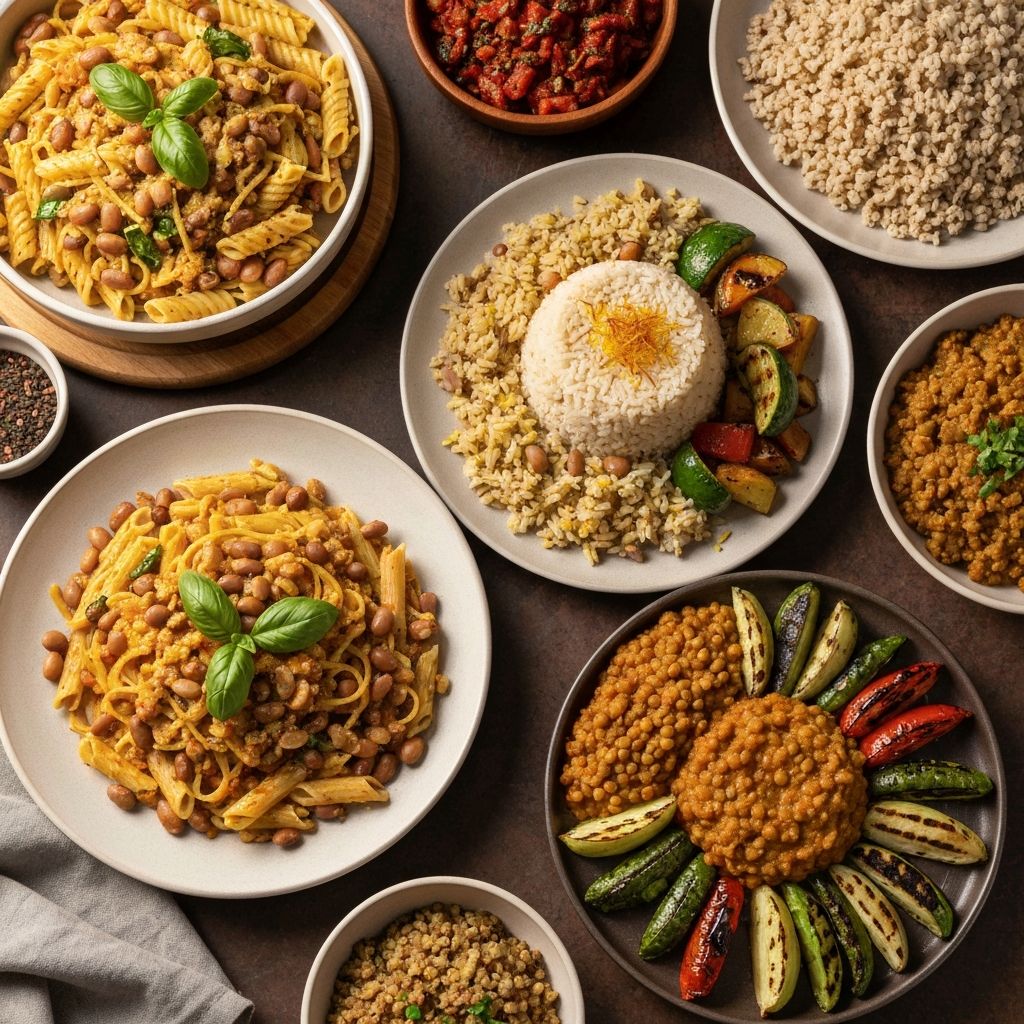
Introduction: Culture and Nutrition
Food practices reflect cultural values, geographic availability, climate, agricultural traditions, and historical influences. Different cultures have developed distinct dietary patterns that, while varying in macronutrient ratios, often support health and longevity in their populations. Examining these diverse approaches provides insights into how varying macronutrient distributions can sustain human health.
Mediterranean Dietary Pattern
Regional Characteristics
Countries bordering the Mediterranean Sea—including Greece, Italy, Spain, and parts of North Africa—share a dietary pattern historically centered on olive oil, legumes, whole grains, vegetables, fruits, and fish. Meat consumption is moderate, and dairy is typically limited to cheese and yogurt.
Macronutrient Profile
Fats: 35-40% of calories, primarily from olive oil (unsaturated). Carbohydrates: 45-50% of calories, primarily from whole grains and legumes. Protein: 10-15% of calories, from fish, legumes, and moderate dairy.
Scientific Perspective
Mediterranean dietary patterns have been extensively studied and associated with lower rates of cardiovascular disease, cognitive decline, and various chronic conditions. The emphasis on unsaturated fats, fiber-rich carbohydrates, and moderate protein demonstrates one viable macronutrient distribution.
East Asian Dietary Patterns
Traditional Asian Approaches
Throughout East Asia—China, Japan, Korea, and Southeast Asia—traditional diets emphasize rice or other grains as the primary carbohydrate source, with vegetables, legumes, fish, and modest amounts of meat or poultry. Cooking methods often involve steaming and stir-frying.
Macronutrient Profile
Carbohydrates: 55-65% of calories, primarily from grains and legumes. Fats: 15-25% of calories, from oils, fish, and modest meat. Protein: 10-15% of calories, balanced between plant and animal sources.
Longevity Data
Populations following traditional East Asian dietary patterns have historically demonstrated exceptional longevity and low rates of chronic diseases. This macronutrient pattern, with higher carbohydrate emphasis, challenges the assumption that lower carbohydrate intake is necessary for health.
African Dietary Traditions
Continental Diversity
Africa encompasses tremendous dietary diversity. Traditional sub-Saharan diets vary by region but often emphasize whole grains (millet, sorghum, teff), legumes, tubers, vegetables, and, in pastoral regions, modest animal products. Preparation methods include grinding grains into flour, cooking legumes into stews, and fermenting foods.
Macronutrient Variation
Macronutrient ratios vary considerably across African regions depending on agriculture and pastoralism. However, a common pattern includes high carbohydrate intake from grains and legumes, moderate to low fat intake, and variable protein from plant and animal sources.
Nutritional Strength
Traditional African diets, particularly those with minimal processing, provide substantial fiber, resistant starch (from cooked and cooled grains), and micronutrient diversity. These patterns demonstrate long-term population sustainability despite varying macronutrient profiles.
Indigenous American Dietary Patterns
Pre-Columbian Traditions
Indigenous peoples of the Americas developed sophisticated agricultural systems centered on corn, beans, squash, and various indigenous foods. Protein came from legumes, fish in coastal areas, and game in forested regions. Fat intake varied by geography and season.
Macronutrient Characteristics
Traditional diets combined corn (carbohydrate and protein) with beans (protein and carbohydrate) in complementary ratios that provided complete amino acid profiles. Squash, other vegetables, and native fruits provided carbohydrates and micronutrients.
Nutritional Wisdom
The corn-and-beans combination exemplifies nutritional synergy—together providing complete protein despite each being individually incomplete. This demonstrates how traditional food combinations often address nutritional needs through practical experience rather than scientific calculation.
Northern European Dietary Patterns
Scandinavian Traditions
Northern European diets, particularly in Scandinavia, traditionally emphasized whole grains, root vegetables, legumes, fish, and dairy. Geographic challenges limited tropical fruit and vegetable availability seasonally. Fermentation and preservation techniques extended food availability.
Macronutrient Profile
Carbohydrates: 40-50% of calories, from grains and root vegetables. Protein: 15-20% of calories, from fish and dairy. Fats: 30-40% of calories, from fish oil, dairy fat, and seed oils.
Longevity and Health
Modern populations following traditional Nordic dietary patterns show excellent health outcomes. Notably, moderate to higher fat intake, including from dairy, doesn't preclude cardiovascular health when carbohydrate quality and overall lifestyle factors are considered.
Comparison and Insights
| Dietary Pattern | Primary Carbohydrate | Protein Sources | Fat Emphasis | Health Status |
|---|---|---|---|---|
| Mediterranean | Whole grains, legumes | Fish, legumes, dairy | Olive oil (unsaturated) | Excellent |
| East Asian | Rice, grains, legumes | Fish, legumes, modest meat | Vegetable oils (moderate) | Excellent |
| African Traditional | Grains, legumes, tubers | Legumes, modest animal products | Modest, plant-based | Good (when minimally processed) |
| Indigenous American | Corn, squash, beans | Legumes, game, fish | Modest, seasonal variation | Good (pre-industrialization) |
| Northern European | Whole grains, root vegetables | Fish, dairy, legumes | Fish oil, dairy fat (higher) | Excellent |
Common Threads Across Cultures
Whole Foods Emphasis
Despite macronutrient variation, all traditional dietary patterns emphasized minimally processed whole foods. Modern health challenges often arise not from macronutrient ratios but from processing and the displacement of whole foods.
Plant-Forward Foundations
Most traditional patterns derived the majority of calories from plant foods—grains, legumes, vegetables, and fruits—with animal products serving as complementary protein and nutrient sources rather than dietary foundations.
Seasonal and Local Eating
Cultural diets historically adapted to what grew locally and seasonally. This resulted in dietary diversity and resilience to supply disruptions.
Conclusions: Cultural Wisdom and Nutritional Science
The remarkable diversity of macronutrient ratios across cultures that have sustained healthy, long-lived populations challenges the notion that one specific macronutrient distribution is universally optimal. Instead, evidence suggests that multiple macronutrient profiles can support health when based on whole foods, balanced proportions, and lifestyle factors. Cultural dietary wisdom, developed through generations, often embodies nutritional principles that science is only recently beginning to understand comprehensively. Rather than seeking one ideal ratio, understanding the principles underlying these diverse patterns—whole foods, appropriate portions, cultural context—may provide more durable nutritional guidance.
Continue Your Journey
Explore more perspectives on nutrition and dietary science.
Back to Blog Main Content